
In the world of low-voltage power distribution, the Molded Case Circuit Breaker (MCCB) is the primary line of defense against electrical faults. However, not all MCCBs are created equal. The core difference lies in the trip unit—the “brain” of the breaker that decides when to disconnect the circuit.
For engineers and industrial buyers, the choice usually comes down to two technologies: the standard thermal-magnetic MCCB and the electronic adjustable MCCB. Choosing the wrong one can lead to “nuisance tripping,” equipment damage, or poor system coordination. This guide explores the technical mechanics, advantages, and ideal applications for both.
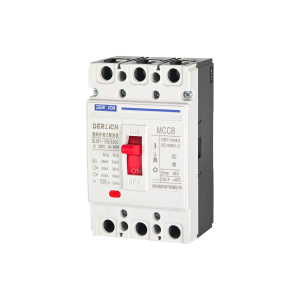
Standard Thermal-Magnetic MCCB
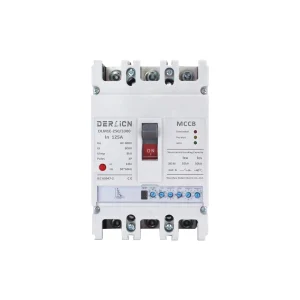
Electronic adjustable MCCB
The Standard Thermal-Magnetic MCCB
The thermal-magnetic trip unit is the traditional workhorse of the industry. It relies on physical properties and mechanical movement to detect faults.
How it Works: Two-Stage Protection
As the name suggests, this breaker uses two distinct methods to protect the circuit:
- Thermal Protection (Overload): This stage utilizes a bimetallic strip. As current flows through the strip, it heats up. If the current exceeds the rated limit (In) for a sustained period, the two metals expand at different rates, causing the strip to bend and mechanically trip the breaker. This is a “time-delayed” response, perfect for handling temporary inrush currents (like a motor starting).
- Magnetic Protection (Short Circuit): For high-level faults, an electromagnet is used. When a massive spike in current occurs (a short circuit), the magnetic field becomes strong enough to instantly pull a trip bar, disconnecting the circuit in milliseconds.
Limitations of Standard Models
Standard thermal-magnetic breakers are often “fixed” or only allow for minor adjustments to the thermal setting. They are sensitive to ambient temperature; if the electrical room is very hot, the bimetallic strip may bend prematurely, causing a nuisance trip.
The Electronic Adjustable MCCB (ETU)
An electronic MCCB uses an Electronic Trip Unit (ETU). Instead of relying on heat and magnetism to move a mechanical bar, it uses Current Transformers (CTs) and a microprocessor.
How it Works: Digital Precision
Sensing: Internal CTs monitor the current on each phase.
Processing: The microprocessor converts this into a digital signal and compares it against the user-defined settings.
Tripping: If the current exceeds the programmed parameters, the ETU sends a signal to a flux-transfer shunt trip, which fires a plunger to open the contacts.
The Power of “Adjustability” (LSI Settings)
The primary advantage of an electronic MCCB is the ability to fine-tune the trip curve. Engineers refer to this as LSI protection:
L (Long-time): Adjusts the overload protection. Unlike thermal strips, this is highly accurate and not affected by ambient temperature.
S (Short-time): A deliberate delay allowed before tripping during a short circuit. This is crucial for selectivity, allowing a downstream breaker to clear a fault first without shutting down the entire floor.
I (Instantaneous): The threshold for an immediate trip during a severe fault.
Key Technical Differences
| Feature | Thermal-Magnetic MCCB | Electronic Adjustable MCCB |
|---|---|---|
| Detection Method | Physical (Heat/Magnetism) | Digital (Current Transformers/Microprocessor) |
| Accuracy | Moderate (Subject to +/- 20%) | High (Highly precise digital sensing) |
| Adjustability | Limited (Often fixed or 0.8–1.0x In) | Extensive (Wide range of L, S, I settings) |
| Temperature Sensitivity | Highly affected by ambient heat | Immune to ambient temperature changes |
| Harmonics | Generally unaffected | Can be affected (requires "True RMS" sensing) |
| Cost | Economical | Higher initial investment |
Why Accuracy and Selectivity Matter
In complex industrial environments, circuit breaker coordination is a top priority.
The Coordination Challenge
If you have a large main breaker feeding ten smaller sub-breakers, you want the sub-breaker to trip if a specific machine fails. With standard thermal-magnetic breakers, the trip curves are “thick” and often overlap. This can cause the main breaker to trip simultaneously with the sub-breaker, causing a total blackout.
The Electronic Solution
Because electronic MCCBs have “tight” and adjustable trip curves, engineers can “stack” the curves perfectly. By adjusting the Short-time delay (S), you can program the main breaker to “wait” for 100ms, giving the downstream breaker time to clear the fault. This ensures maximum uptime for the facility.
Advanced Features: Monitoring and Communication
Modern electronic MCCBs do more than just trip. Many models now include:
Power Metering: Measuring Voltage (V), Current (A), Power Factor, and Energy (kWh) directly at the breaker.
LCD Displays: Showing real-time load data and the “cause of trip” (e.g., whether it was an overload or a short circuit).
Communication Protocols: Using Modbus or Profibus to send data to a SCADA system or a building management system (BMS). This is vital for predictive maintenance and energy auditing.
Selection Guidance: Which One to Choose?
Choose a Thermal-Magnetic MCCB if:
You are working on a residential or simple commercial project.
The load is simple (lighting, standard heaters).
Budget is the primary constraint.
You are in an environment with high harmonic distortion (which can sometimes confuse cheaper electronic units).
Choose an Electronic Adjustable MCCB if:
You are designing an industrial plant or data center where uptime is critical.
You need to achieve system selectivity between multiple layers of breakers.
The MCCB is located in an area with high ambient temperatures (like a factory in a tropical climate).
You require remote monitoring or need to track energy consumption.
You are dealing with high-capacity loads (usually above 400A–630A).
Frequently Asked Questions (FAQs)
1. Are electronic MCCBs more reliable?
Electronic MCCBs are generally more reliable in terms of accuracy and repeatability. However, they contain sensitive electronics. High-quality manufacturers ensure these are “hardened” against electromagnetic interference (EMI).
2. Can I replace a thermal-magnetic MCCB with an electronic one?
Yes, provided the frame size and interrupting capacity (Icu) are compatible. In fact, many factories upgrade to electronic units to solve recurring nuisance tripping issues.
3. What does “True RMS” mean in electronic breakers?
“True RMS” means the breaker calculates the heating effect of the current accurately, even if the waveform is distorted by “noise” from VFDs (Variable Frequency Drives) or LED lighting.
4. Is the maintenance different?
Electronic breakers require “secondary injection testing” to verify the electronics are working correctly. Thermal-magnetic breakers are usually tested via “primary injection” (actually running high current through them), which is more invasive.
Conclusion
The evolution from thermal-magnetic to electronic adjustable MCCBs represents a shift from mechanical protection to digital intelligence. While the thermal-magnetic breaker remains a reliable and cost-effective solution for basic applications, the electronic MCCB provides the precision, adjustability, and communication capabilities required by modern, high-tech infrastructure.
For engineers looking to optimize their power distribution systems, investing in electronic trip technology is often the most effective way to ensure long-term stability and safety.
Ready to upgrade your system protection?
We offer a comprehensive range of MCCBs, from standard thermal-magnetic units to advanced electronic adjustable models with full CE certification. Our technical files and product catalogs are available to help you make the right selection for your next project.
Table of Contents
Have you Any Questions?
Can’t find an answer to your question, or want more information about our products? If so, please feel free to get in touch with our professional team. We’re here to help you drive your projects to success.