Overview
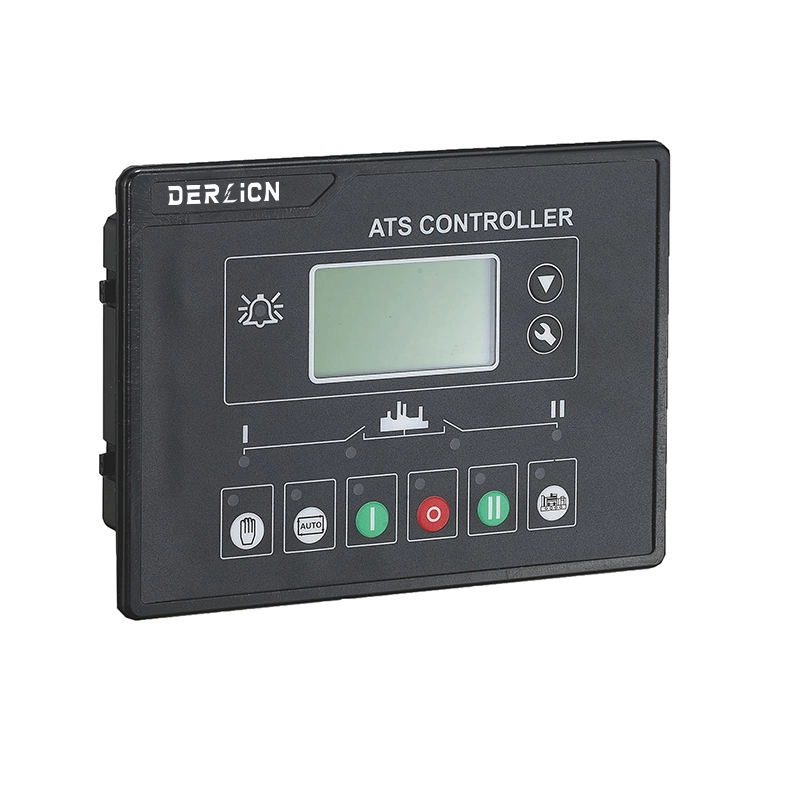
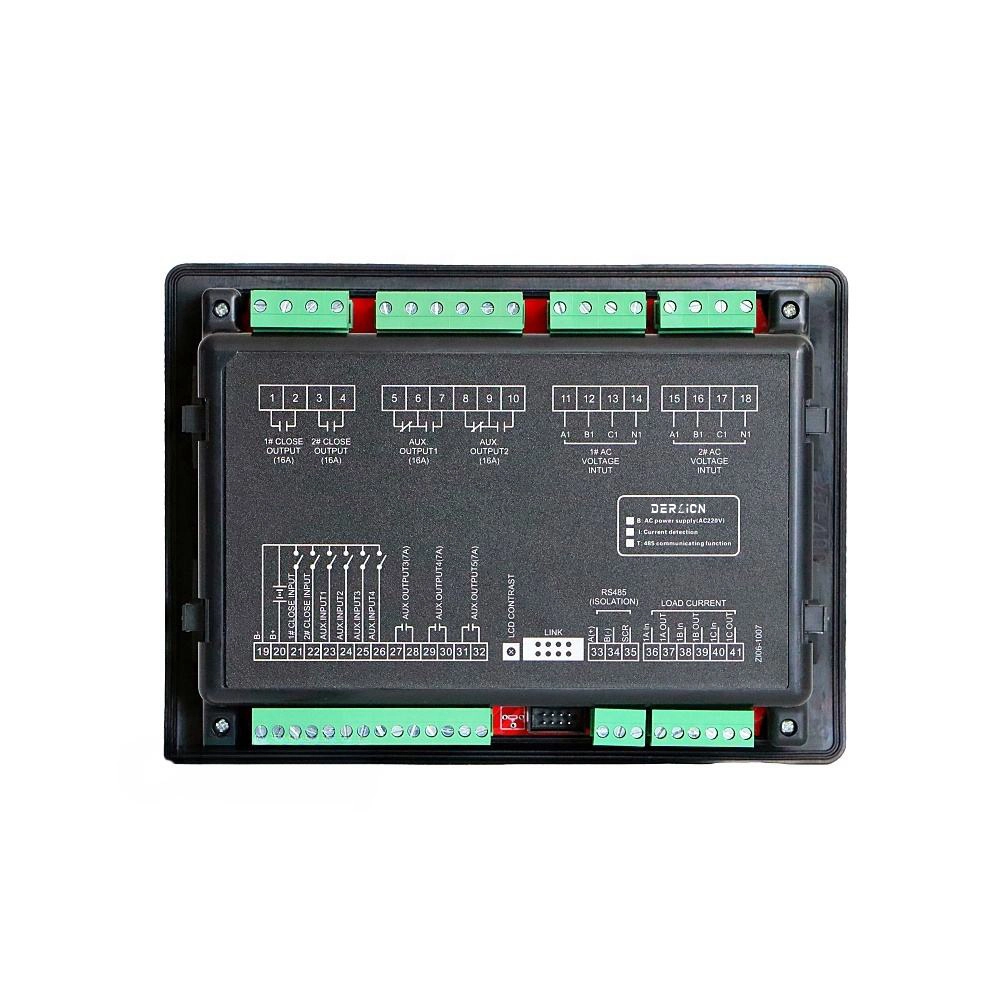
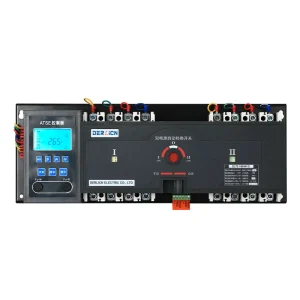
The DLC-700 ATS Controller is an advanced, modular dual-power control unit engineered for professional ATS systems. It supports a wide operating voltage range (DC 8–35V) and optional AC220V power input, making it suitable for diverse installation environments.
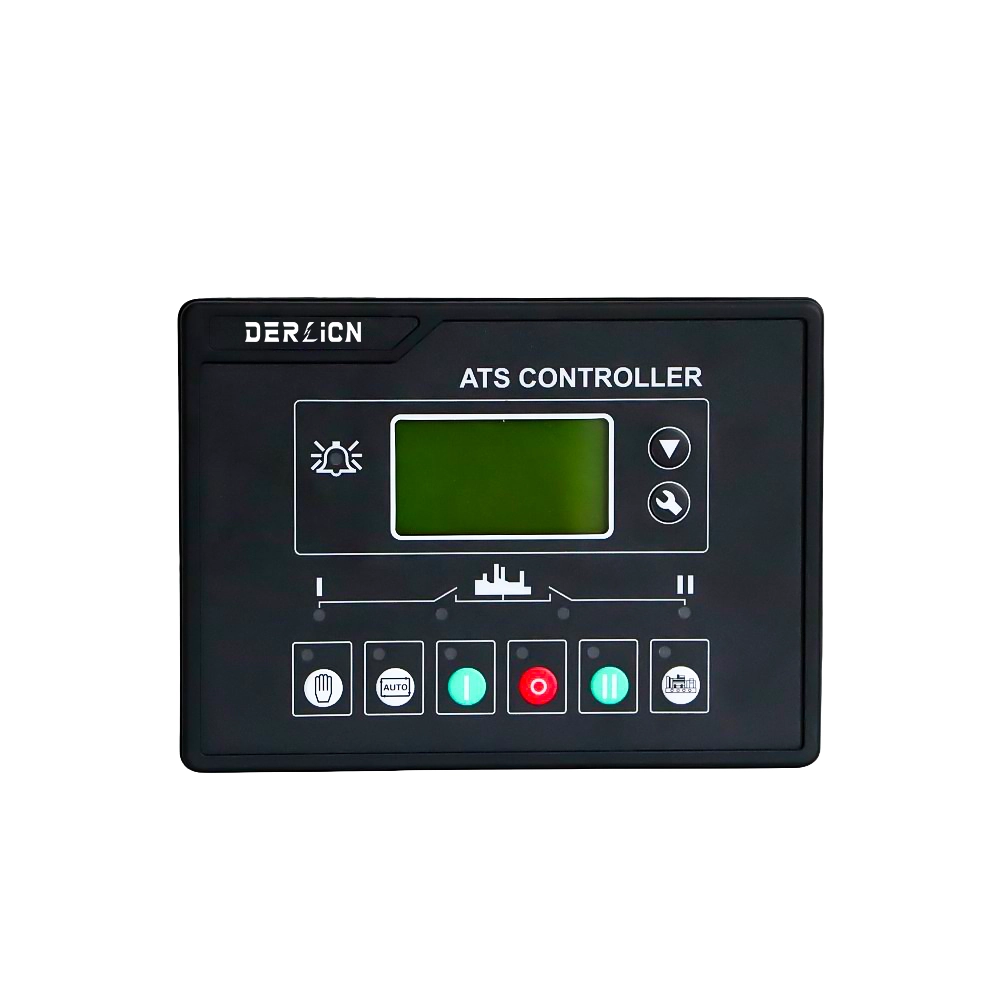
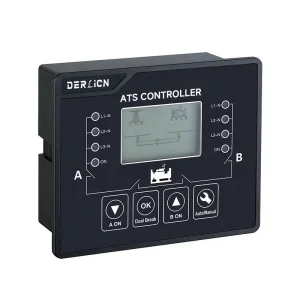
Equipped with a 128×64 LCD display, bilingual interface (EN/CH), and touch-key operation, it allows real-time monitoring of two three-phase power sources, including voltage, frequency, and system status.
The DLC-700 offers overvoltage, undervoltage, phase loss, reverse phase sequence, overfrequency, and underfrequency protection, ensuring complete power quality monitoring. With programmable switching delays, load/no-load test modes, reclosing functions, and pulse/maintained output options, it provides full flexibility for professional power system integration.
Optional features include:
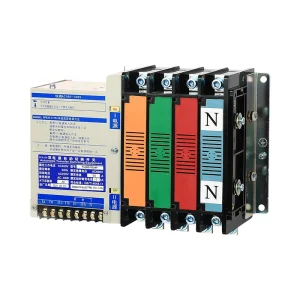
The DLC-700 supports single-break, double-break, and non-breaking switches, with detachable installation, IP55 protection (with gasket), wide temperature tolerance (-25°C to +70°C), and multiple wiring formats including 3-phase 4-wire, 3-phase 3-wire, single-phase 2-wire, and dual-phase 3-wire.
FAQ
1. What are the main differences among the DLC-700, DLC-701, and DLC-702?
All three models belong to the same intelligent controller family, designed for automatic transfer switches and dual-power systems. Their core logic and protections are consistent, but they differ in functional expansion, communication capability, and user-interface features.
- The DLC-700 is the fundamental version for standard ATS control;
- The DLC-701 adds more monitoring options and improved parameter programmability;
- The DLC-702 offers the most advanced package, including enhanced diagnostics, wider communication compatibility, and additional input/output terminals for more complex applications.
2. What type of ATS products can these controllers be used with?
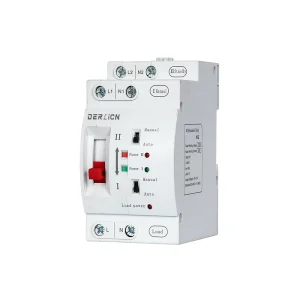
The controllers are suitable for various ATS structures including breaker-based ATS, switch-based ATS, and switch-disconnector-based ATS. They support both manual and automatic modes and can function with 2-pole, 3-pole, and 4-pole dual-power transfer switches. Compatibility is designed to be broad, allowing integration with mainstream ATS brands or customized OEM ATS equipment.
3. Do these controllers support programmable parameters?
Yes. All three models allow adjustments to transfer delay, retransfer delay, over/under-voltage thresholds, phase-loss detection, frequency range, and protection timings.
The DLC-701 and DLC-702 provide even deeper customization, enabling users to tailor control logic for specific project requirements, such as generator-start timing, mains-priority selection, and input signal behavior.
4. Can the DLC-700/701/702 work with generator systems?
Absolutely. The controllers can monitor mains and generator inputs, and depending on the model, they can initiate generator start signals when the mains fails. The DLC-702 offers the most complete generator-related functions, providing stable transfer logic, warm-up and cool-down timing, and safety protections to ensure that the generator is loaded only under safe electrical conditions.
5. What protections do these controllers provide?
The controllers protect against under-voltage, over-voltage, phase loss, phase sequence errors, and abnormal frequency. They ensure that power transfer only occurs when both power sources are within safe operating standards.
The higher-end DLC-702 also provides richer diagnostic functions that help reduce equipment downtime and enhance long-term reliability.
6. Do they support remote monitoring or communication?
The DLC-700 provides basic local display and control, while the DLC-701 offers additional monitoring enhancements. The DLC-702 features the strongest communication capability, supporting RS-485/Modbus-RTU for remote monitoring, system integration, and centralized management. This makes it suitable for smart energy systems, industrial automation, and intelligent power distribution platforms.
7. How difficult is the installation process?
Installation is straightforward. Each unit is designed for rapid wiring with clearly marked terminals and intuitive interface prompts. The controllers include self-diagnostic startup checks, and detailed wiring diagrams are provided for quick commissioning. Even in projects requiring more complex interlocks or external signals, the DLC-702 simplifies integration with its extended I/O configuration.
8. Can these controllers be used in industrial environments?
Yes. Their design supports commercial and industrial-grade applications including factories, data centers, telecom stations, warehouses, shopping centers, and government infrastructure. The controllers are engineered for continuous operation, strong electrical interference resistance, and high reliability in long-term dual-power switching systems.
9. What certifications or quality assurances do you provide?
All DLC-700/701/702 units undergo full functional testing before delivery. Our company is an established manufacturer located in Zhejiang, China’s electrical capital, with years of experience in exporting ATS products and accessories. We support OEM/ODM, offer strict quality control, and ensure compliance with international electrical standards required by global markets.
10. Do you support OEM/ODM customization for these controllers?
Yes. We can customize software parameters, branding, interface language, wiring definitions, and panel design. For partners with specific project needs, we offer technical consultations, custom functions, and firmware adjustments to ensure perfect compatibility with their ATS or generator systems.
11. How do I choose the right model?
If you need standard automatic transfer functions, the DLC-700 is sufficient. If your project requires more adjustable parameters or enhanced monitoring, the DLC-701 provides better flexibility. For users needing communication support, advanced diagnostics, generator integration, or more complex control logic, the DLC-702 is the ideal choice.
12. What after-sales support do you offer?
We provide lifetime technical support, wiring guidance, parameter adjustment assistance, and fast response for troubleshooting. For long-term partners, we also offer engineering consultation, documentation support, and remote debugging when needed.